Why Korean Fashion Brands Should Consider China Production — and How to Succeed
1. Introduction: The Current State of Korean Fashion
The Korean fashion industry is growing rapidly, expanding its influence not only domestically but across global markets. In step with this growth, fashion brands are actively exploring overseas production — particularly in China — as a key strategic consideration. In this context, “fashion production” refers not to marketing, but to a comprehensive service covering all stages of apparel manufacturing and supply chain management.
2. What Is Fashion Production?
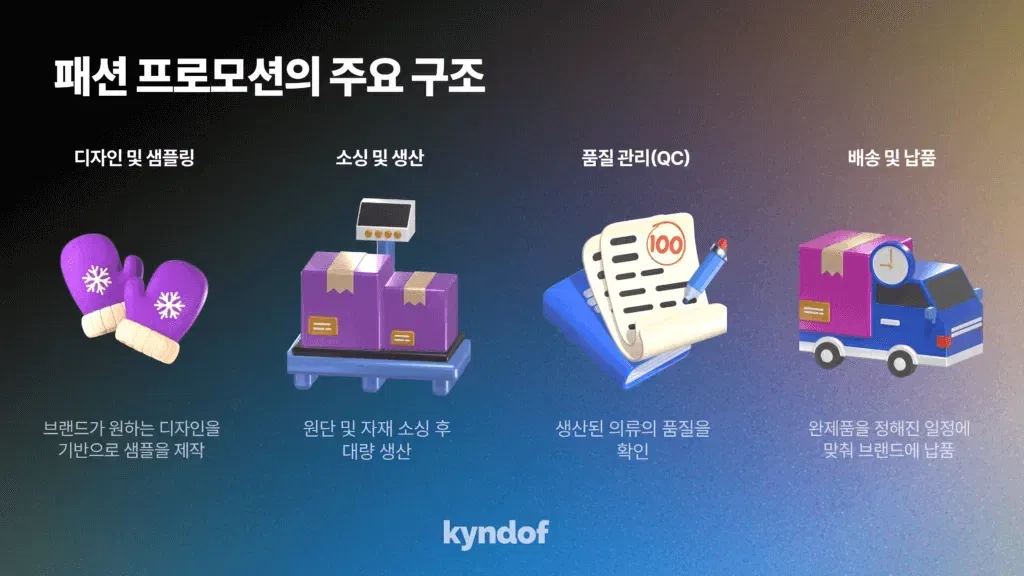
Fashion production is a service that manages the entire apparel manufacturing process on a brand’s behalf. This includes material sourcing, pattern-making, grading, sample production, factory liaison, bulk production oversight, QC, and logistics — handling every link in the supply chain from design intent to finished product delivery.
3. The Challenges of Korea-Based Production
While domestic production offers important advantages — close proximity, fast communication, and relatively reliable quality — it comes with significant limitations for growing brands.
• High unit costs: Rising labor costs in Korea make it difficult to maintain competitive pricing, especially for volume production.
• Limited capacity: Korean factories are increasingly difficult to book for larger order quantities, and many have reduced their workforce in recent years.
• Lead time pressures: Tight domestic capacity can extend lead times, particularly during peak periods.
4. Why China Production Makes Strategic Sense
China remains the world’s largest apparel manufacturing hub, and for good reason.
• Cost efficiency: Significant savings on unit costs, especially for styles well-suited to Chinese manufacturing.
• Scale capacity: China’s manufacturing ecosystem can handle the volume requirements that Korean factories often cannot.
• Material sourcing: Proximity to fabric and trim suppliers within China reduces both cost and lead time for sourcing.
• Diverse factory specialization: China’s manufacturing base includes factories specialized in virtually every category — from knitwear to outerwear to accessories.
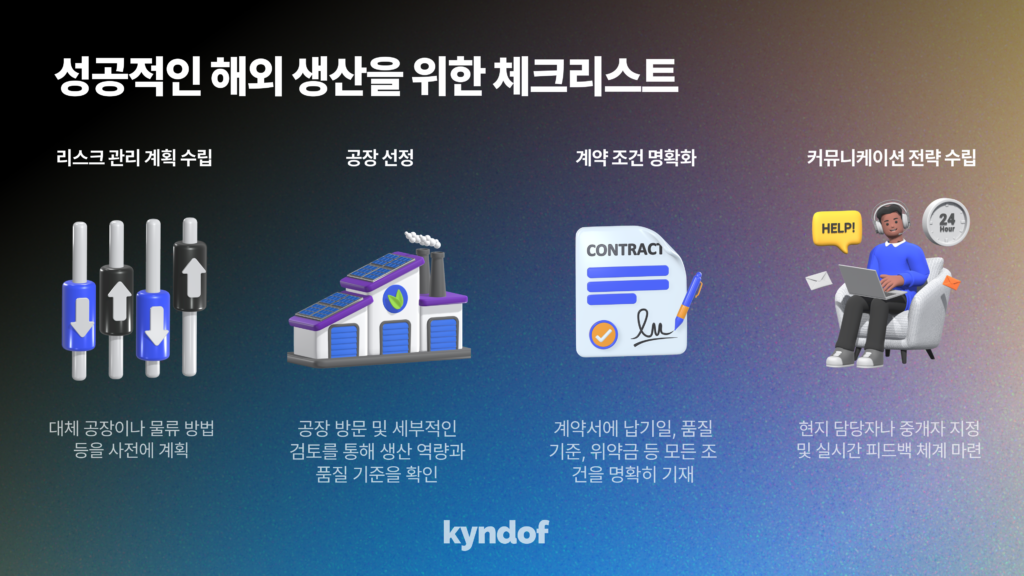
5. Key Risks and How to Manage Them
• Quality control: Establish clear tech packs and QC standards before production begins. Use a third-party inspection service for bulk shipments.
• Communication: Work with bilingual production agents who can bridge language and cultural gaps effectively.
• Lead time management: Plan around major Chinese holidays (especially Lunar New Year) and build buffer time into your production calendar.
• IP and design protection: Use NDA agreements with factories and avoid sharing original design files digitally when possible.
6. Conclusion: A Strategic, Not Wholesale, Shift
The decision to move to China production is not all-or-nothing. Many brands benefit most from a hybrid approach — producing simpler, higher-volume SKUs in China while keeping complex, design-intensive styles in Korea. The key is matching the right production source to the right product, guided by a clear-eyed analysis of cost, quality, timeline, and brand positioning.
Kyndof works with fashion brands at every stage of this decision — from initial feasibility analysis to full production management in China. If you’re considering this shift, we’d love to help you find the right path forward.