
Kyndof Runs Its Fashion Operation on AI Agents, Raising 3.8 Billion Won
Kyndof automates costume design, manufacturing and brand operations with AI agents, posting 4 billion won in revenue last year and securing 3.8 billion won in funding.
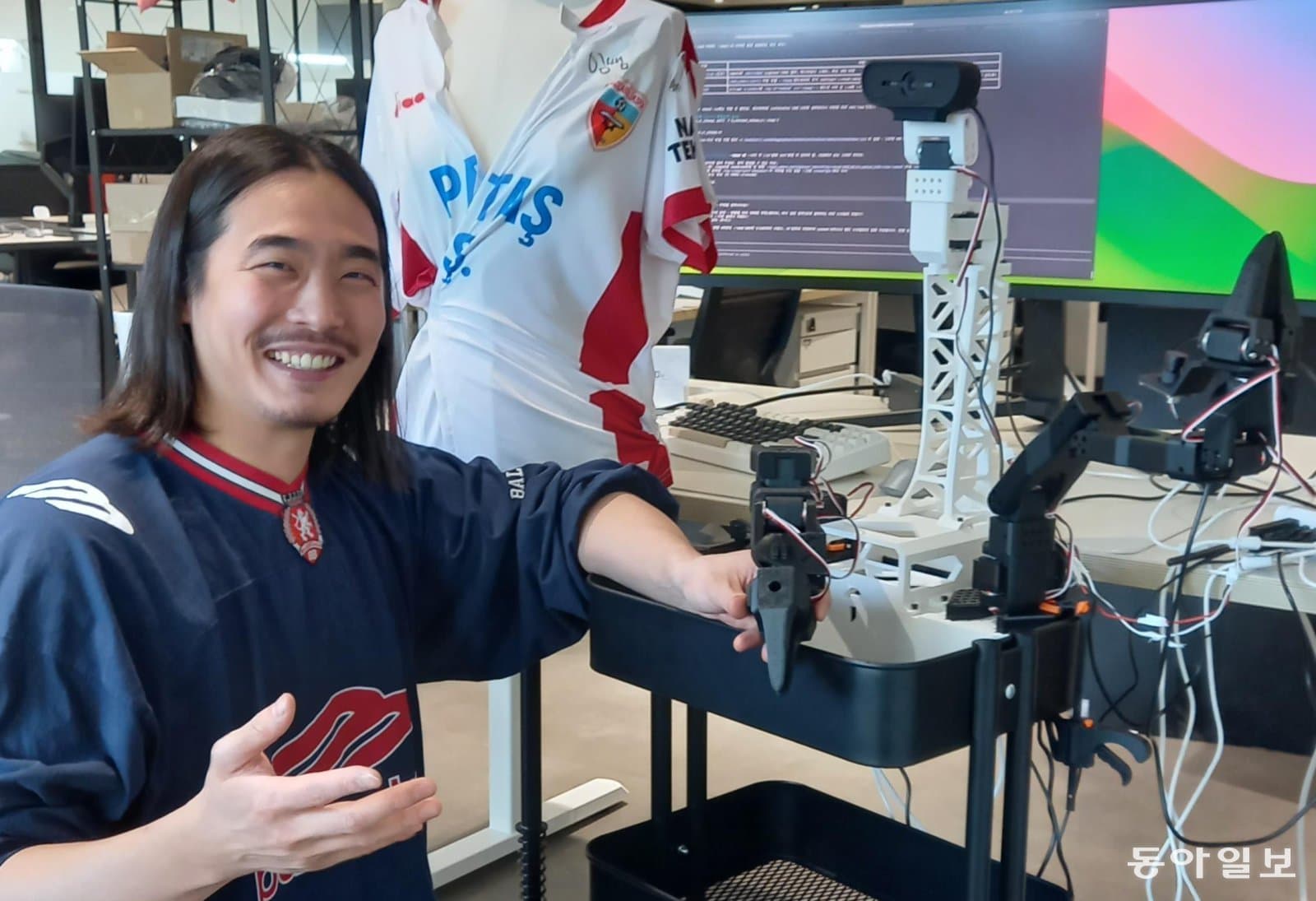
On the 13th floor of the Hyundai City Outlet in Dongdaemun-gu, Seoul, the screens in Kyndof's office show artificial intelligence agents talking to one another without pause as they carry out tasks. No people are involved. There are no developers and no researchers, yet 15 development projects, including brand operations and management, are under way. Each AI agent approves, revises and sends feedback to the others, keeping the work moving on its own. Meeting at the office on the 29th of last month, Kyndof chief executive Kim Sunbin, 35, said, “In a traditional development organization this would take dozens of people.”
Kyndof supplies stage costumes at high quality and on short timelines for well-known K-pop groups including BLACKPINK, aespa, LE SSERAFIM and IVE. Its core business is delivering costumes on the schedule of those groups' performances and shoots. It does not stop at stage costumes, though: it turns them into fashion products and takes them to the global market.
The problem the company is trying to solve is not simply how to make clothes well, but the structure of the stage and drama costume industry itself. In a market where K-pop artists change outfits several times a day for performances and music videos, the traditional approach, in which a single suit takes more than a month, does not fit. “A client asks for it in three days, and the order calls for 10 pieces for each member of an idol group,” Kim said. “That is only possible with a completely different method from ordinary made-to-measure.”
Speed alone is not enough. Even when a stylist dresses an artist in luxury goods sold in stores, fans today complain: ‘Why are you putting them in store-bought clothes? They should get good custom pieces.’ As fandom expectations rise, the difficulty of making the costumes goes up and the lead times get shorter. Speed and quality have to be met at once. Even so, Kim said, almost no supplier has tried to industrialize the field. Because operations are small, workshop-style businesses, delivery dates are not kept as precisely as at large companies, and garments that differ from the design intent often have to be accepted.
Kyndof has combined an AI for computerizing embroidery patterns, known as digitizing, with its automated process. To embroider a garment, someone has to specify in which direction and along which grain the needle moves, tens of thousands of times. Digitizing is the computerization of that specification work. The company's AI bot, Tomitom, generates a work order for, say, 50,000 stitches on its own and sends it automatically to the embroidery machine. “Once the rendering that makes the design look like the real thing is finished, the digitizing file is generated automatically and the instructions go down to the embroidery machine, all handled in one pass with no human intervention,” Kim said.
The design stage works the same way. Previously, 2D flat drawings were sent to stylists, which led to constant clashes of interpretation along the lines of ‘this is not the red I had in mind.’ Kyndof uses AI to provide 3D rendered images that reflect the physical properties of the materials from before production begins. The technology is meant to minimize the gap between design intent and the finished garment. The work order for a single outfit for one idol, covering the pattern, measurements, the placement of trims and the embroidery design, is also generated automatically by AI. Work that people once divided among themselves and spent hours on is now finished in an instant. The company is also standardizing its methods so that body measurements produce the same result no matter who takes them, and is building a system that uses digital dummies for virtual fitting without a physical sample.
Automating high-end custom production requires photographing each step of the garment-making process and accumulating the images as data, because producing a flawless result in one pass means being able to supervise the process by looking at photographs in real time. Whether the position and color of a logo came out correctly, for instance, is checked by AI comparing the original design with photographs from the process.
Kim, who graduated from Korea University with a degree in statistics, worked as a quant, a specialist who builds investment strategies with mathematical models, at a US hedge fund. He had always wanted to start a company, and in his university years he built and then shut down a movie recommendation engine startup and a social media bio-link service similar to Linktree. When vintage clothing photographs posted on social media by Hong Daeun, now Kyndof's creative director and his spouse, drew a following, Kim began advising and supporting her on matters such as cash flow forecasting; the collaboration grew from there, and the company was incorporated in 2023.
The signature result of Kyndof's business model is the productization of stage costumes. The ripped jeans BLACKPINK's Lisa wore in performance are one example. Kyndof moved the concept of that costume to its 2000Archives brand and released denim pants for general consumers at 230,000 won, which ranked first in women's denim pants sales on Musinsa in January this year. The Kyndof ‘geek chic’ glasses that aespa's Karina wore at the airport followed the same pattern. On the strength of a close working relationship with aespa, the company proposed that Karina wear them before release, creating a structure in which the exposure translates directly into sales.
Two years after its founding, Kyndof recorded annual revenue of 4 billion won last year with five employees. It raised 2.6 billion won in investment, more than double its 1.2 billion won target, and its selection for the TIPS Global Track added 1.2 billion won in research and development funding, bringing the total secured to 3.8 billion won. The company also plans to enter the US entertainment market, including Hollywood. The idea is to work not only with K-pop but with Hollywood actors and singers at the very top of the entertainment industry and turn those looks into global fashion products. “Overseas consumers perceive the fashion K-pop stars wear as ‘K-fashion,’ and we will build the brand that fills exactly that space,” Kim said.
Based on reporting by The Dong-A Ilbo
External Source
This page summarises coverage published elsewhere. The original article is on the publisher’s site.
Is this article not about Kyndof?